Custom vs Stock Cabinets
Cabinets can take a big share of your kitchen budget, often **25% to 30%**. The right choice depends on your layout, timeline, storage needs, finish level, and how long you plan to stay in the home.
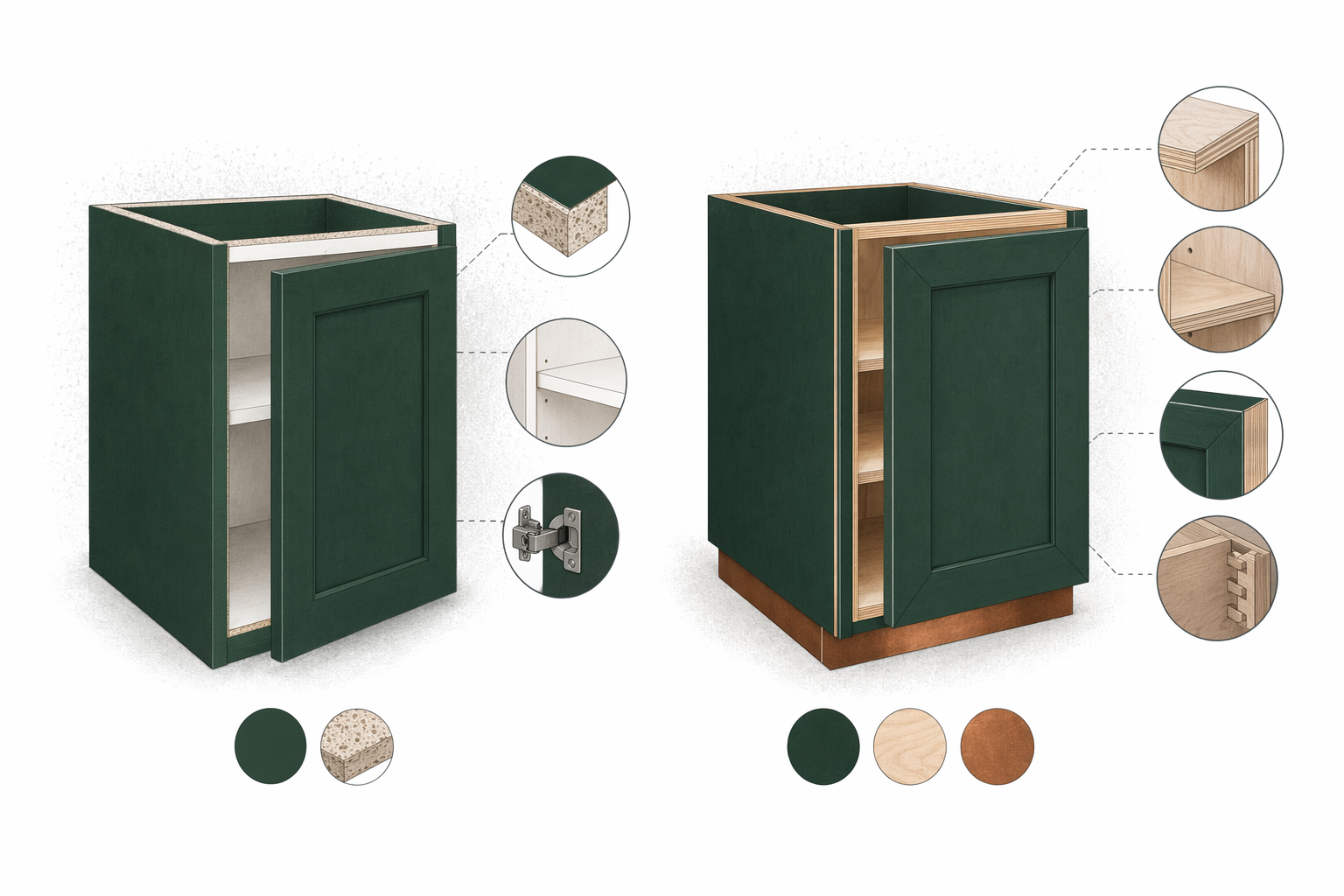
The short version
Stock cabinets are the fastest and usually the cheapest. They come in standard sizes, limited styles, and a smaller color range. They work well if your kitchen layout is simple and you want to control cost.
Custom cabinets are built for your exact space. You get more size options, more storage details, and more finish choices. They can solve awkward corners, old-house walls that are not straight, or a layout where every inch matters. The tradeoff is price and time.
A practical middle ground also exists: many homeowners choose semi-custom, then spend more only on the parts that matter most, like a pantry wall, island drawers, or better organizers. If you are still sorting out the full plan, start with cabinet options and compare that against your overall kitchen remodel budget.
Custom vs stock at a glance
| Category | Stock cabinets | Custom cabinets |
|---|---|---|
| Typical cabinet cost | Lower end of the range | Higher end of the range |
| Best for | Straightforward layouts, rental updates, budget-conscious remodels | Unique layouts, older homes, high-end finishes, maximum storage |
| Sizes | Standard widths and heights | Built to your exact dimensions |
| Style choices | Limited but improving | Very broad |
| Colors/finishes | Limited set | Wide choice, including paint and stain matching in many cases |
| Lead time | Usually fastest | Usually longest |
| Installation fit | Fillers may be needed | Cleaner fit in tricky spaces |
| Storage features | Basic options | More tailored interior storage |
| Repairs/reorders | Often easier if the line stays available | Can be slower and may require matching a custom finish |
For the full kitchen, typical remodel ranges are often:
- Minor refresh: $5,000-$25,000
- Mid-range remodel: $25,000-$60,000
- Full gut remodel: $60,000-$150,000+
Cabinets are only one piece. Countertops, flooring, lighting, labor, and layout changes can move the price a lot. Real cost depends on the size of the kitchen, the scope of work, the materials, and your area.
If you are also comparing surfaces, quartz countertops often run about $60-$120 per square foot installed as a typical range. That can matter because cabinet level and countertop level usually need to make sense together. See countertop materials if you want to compare the whole package.
When stock cabinets make sense
Stock cabinets are a smart choice more often than people think.
Choose stock when:
- Your kitchen footprint is simple and the standard sizes fit without wasting too much space.
- You want a clean, updated look without paying for one-off details.
- Your budget is tight and you want to put money into better counters, appliances, or lighting.
- You need the project moving sooner and cannot wait on a long cabinet build schedule.
- This is a starter home, rental, condo, or resale-focused update where value matters more than customization.
Where homeowners get burned with stock:
- They assume all stock lines are the same. They are not. Drawer box construction, hinges, finish quality, and shelf thickness vary.
- They do not notice the lost space from fillers and standard sizes until after install.
- They overspend on upgrades that push the price close to semi-custom or custom.
Ask these questions before you choose stock:
1. What are the box material, drawer construction, and hinge/slide brands?
2. Are shelves adjustable, and what weight can drawers hold?
3. What fillers, panels, trim, and install extras are not included yet?
4. How long will this cabinet line be available if you need a replacement later?
If your kitchen is a normal rectangle and you mainly want better function and a fresh look, stock can be the honest answer. Not every kitchen needs custom.
When custom cabinets are worth it
Custom tends to make sense when your kitchen has a real problem that standard sizing cannot solve.
Choose custom when:
- Your walls are out of square, ceilings are unusual, or the room has odd corners, soffits, beams, or older-home quirks.
- You want cabinets to the ceiling, unusual depths, or a very specific door style or paint color.
- Storage is a top goal and you want solutions built around how you cook: tray dividers, spice pull-outs, deep drawer stacks, appliance garages, or special pantry layouts.
- You are doing a long-term home and want the kitchen to fit the house, not just fill the room.
- You are changing the layout and trying to use every inch well.
Custom can also help if you are trying to make a small kitchen feel bigger. A few inches gained in the right place can matter more than people expect.
But custom is not automatically better. It is only better if the design is thoughtful, the build quality is solid, and the installer is careful. A poorly planned custom job can still waste space and cost more.
Before you sign anything, get the scope, materials, finish, hardware, and installation details in writing. Hire licensed and insured remodelers, verify the license and insurance yourself, and follow local permit and building-code rules. If the remodel includes layout changes, electrical, plumbing, or wall work, read permit basics and make sure your remodeler explains what is required in your area.
How to decide without regret
Use this simple filter:
1. Measure the room problems first.
If your kitchen is fairly standard, stock may be enough. If the room is tricky, custom may save headaches.
2. Set a total budget, not just a cabinet budget.
Cabinets often take 25% to 30% of the kitchen budget. Spending too much there can force cheap choices in counters, lighting, flooring, or labor.
3. Think about timeline.
If you need the kitchen back fast, stock usually has the advantage.
4. List your must-have storage.
Deep drawers, tray storage, trash pull-out, pantry access, and corner solutions often matter more than fancy door styles.
5. Compare the real installed price.
Do not compare cabinet boxes alone. Compare cabinets, fillers, trim, panels, hardware, delivery, installation, and touch-up.
6. Plan for resale and how long you will stay.
If you may move soon, stock or semi-custom may be the better value. If this is your long-term home, custom may be worth the spend.
A good next step is to get multiple written estimates and compare line by line. With CopperSill, matching is free to homeowners. You share your project details, then you compare quotes, you choose who to hire, and you hold the final payment. If you want help finding pros to price your cabinet plan, start here: get matched.
A smart next step before you buy
Before you commit, ask each remodeler or cabinet supplier for the same basics in writing:
- Cabinet type: stock, semi-custom, or custom
- Box material and door material
- Drawer construction and hardware brand
- Finish details and color name
- What fillers, panels, trim, and crown are included
- Delivery timing
- Installation scope
- Warranty details
- Payment schedule
Then compare apples to apples. The cheapest line item is not always the lowest total project cost.
Also read a practical buying guide before you choose: cabinet buying guide. And no matter what style or budget you pick, hire licensed and insured remodelers, verify that license and insurance yourself, and get the price and scope in writing before any deposit.
If your kitchen is simple and budget matters most, stock cabinets are often the smart buy. If your kitchen is awkward, small, or you want every inch to work harder, custom may be worth it. Get the full scope and price in writing, verify license and insurance yourself, and compare a few estimates before you choose.