Kitchen cabinets & cabinetry
Cabinets usually take the biggest share of a kitchen budget, so this is where smart choices matter. We help you understand your options, plan the job, and compare licensed, insured remodelers for free.
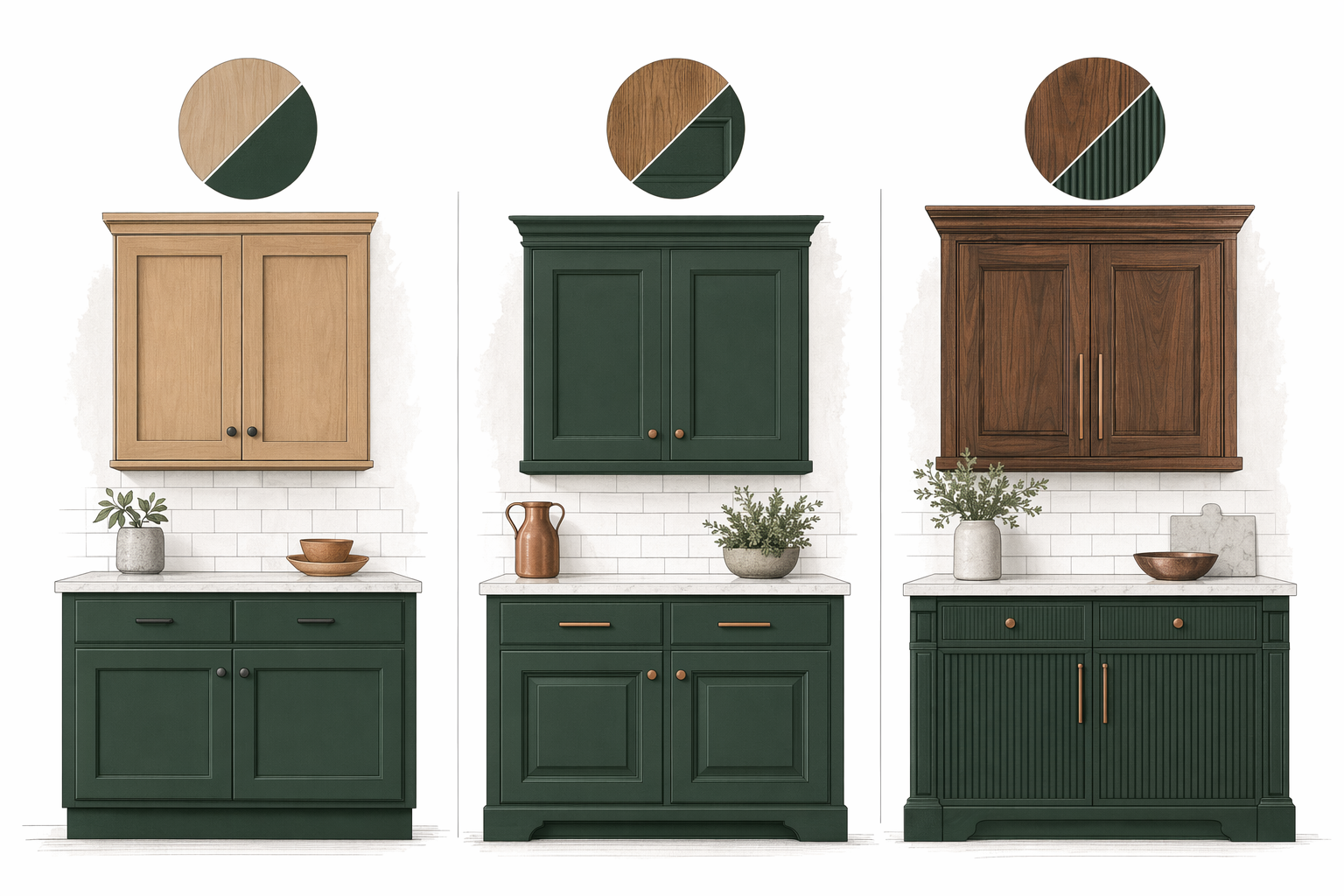
What cabinet work includes
Kitchen cabinetry can mean a lot of different jobs. Sometimes it is a simple swap of old cabinets for new ones. Sometimes it is part of a full kitchen remodel with new layout, counters, lighting, and flooring. The final price depends on the size of your kitchen, the scope of work, the materials, and your area.
Common cabinet projects include:
- Cabinet replacement: remove old cabinets and install new stock, semi-custom, or custom cabinets
- Cabinet refacing: keep the cabinet boxes, replace doors and drawer fronts, add new veneer or finish, and usually new hardware
- Layout changes: move cabinets, add an island, improve storage, or open up a wall as part of a larger remodel
- Accessory upgrades: soft-close hinges, pull-out trash, spice pull-outs, drawer organizers, pantry storage, and under-cabinet lighting
Cabinets are often 25% to 30% of a kitchen remodel budget. That is why homeowners get burned when they choose too fast, or compare prices without matching the same scope. A low number may leave out demolition, delivery, installation, trim, fillers, hardware, or repairs to walls and floors after old cabinets come out.
If your cabinet project is part of a larger renovation, see full kitchen remodel for the bigger picture.
How the process usually works
1. Set your goal first. Do you want better storage, a new look, more usable counter space, or a layout change? If you only hate the door style, refacing may be enough. If the boxes are damaged or the layout does not work, replacement is usually the better long-term move.
2. Measure and document. Take rough measurements of each wall, ceiling height, window and door locations, appliance sizes, and photos of the current kitchen. This helps remodelers understand the job before they visit.
3. Choose a cabinet level. Stock is the fastest and often lowest cost. Semi-custom gives more sizes, finishes, and storage options. Custom gives the most flexibility, but usually costs more and takes longer.
4. Compare written estimates. Ask each remodeler to spell out cabinet brand or line, box construction, door style, finish, hardware, installation, demo, haul-away, and who handles countertop templating if counters are also being replaced.
5. Check license and insurance yourself. Hire licensed and insured remodelers. Verify the license and insurance yourself. Get the full price and scope in writing before any deposit. Follow local permits and building code.
CopperSill does not sell or install cabinets. We are a free matching service. You tell us about your project, and you compare licensed, insured remodelers in your area at get matched.
Typical cabinet cost ranges
There is no one cabinet price that fits every kitchen. These are typical US estimates, not quotes or guarantees. The real cost depends on the size of your kitchen, the scope of work, the materials, and your area.
- Minor cabinet refresh: about $5,000 to $25,000
- Often includes painting or refacing, new hardware, small repairs, and maybe a few accessory upgrades
- Mid-range cabinet replacement: about $10,000 to $30,000+ for cabinets and installation in many average kitchens
- Often includes stock or semi-custom cabinets, demo, install, fillers, trim, and basic hardware
- Higher-end cabinetry as part of a larger remodel: cabinet portion may reach $25,000 to $60,000+
- Common with custom cabinetry, layout changes, premium finishes, more drawers, tall pantry cabinets, or built-in features
A few honest cost drivers:
- Cabinet type: stock < semi-custom < custom
- Wood species and finish: painted finishes and specialty stains can cost more
- Construction quality: plywood boxes, dovetail drawers, and better slides usually add cost
- Storage accessories: pull-outs, organizers, tray dividers, and corner solutions add up fast
- Layout changes: moving plumbing, gas, or electrical can raise the total project cost
- Countertops and backsplash: if cabinets change, counters often change too; quartz counters commonly run about $60 to $120 per square foot installed as a typical range
For broader kitchen pricing, see kitchen remodel costs or compare materials in the cabinet buying guide.
Stock vs. semi-custom vs. custom
Stock cabinets
Best for homeowners who want to control cost and move faster. Sizes and finishes are more limited, but many lines look good and perform well for everyday use.
Pros
- Lower typical price
- Faster ordering in many cases
- Good option for standard-size kitchens
Cons
- Fewer sizes and finish choices
- More fillers may be needed
- Harder to fit unusual spaces neatly
Semi-custom cabinets
A middle ground. You get more flexibility in sizes, styles, storage, and finishes without going fully custom.
Pros
- Better fit than stock
- More style and storage choices
- Often a strong value for mid-range remodels
Cons
- Costs more than stock
- Lead times can be longer
Custom cabinets
Built for your exact kitchen and goals. This is common in older homes with odd dimensions or high-end remodels.
Pros
- Best fit and most design freedom
- Easier to maximize storage
- Can match special layouts and details
Cons
- Highest typical cost
- Longest design and production time
- More decisions, which can slow the project
If you are also replacing counters, our countertop material guide can help you avoid mismatched choices.
Typical timeline and where delays happen
A cabinet job can move quickly or drag out, depending on what you order and whether the layout changes.
Typical timelines:
- Refacing or smaller refresh: often a few days to 2 weeks once materials are ready
- Stock cabinet replacement: often 2 to 6 weeks for planning, delivery, and installation, sometimes more
- Semi-custom or custom cabinetry: often 6 to 12+ weeks when you include measuring, ordering, production, delivery, and install
- Cabinets inside a full remodel: often longer because demo, flooring, electrical, plumbing, drywall, counters, and inspections may affect the schedule
Common causes of delay:
- Cabinets ordered before measurements are fully confirmed
- Long lead times for painted finishes or specialty pieces
- Damaged cabinets discovered at delivery
- Wall, floor, or water damage found after demolition
- Countertop templating delayed because cabinets are not fully installed and level
- Permit or inspection issues when the scope goes beyond simple cabinet replacement
Ask each remodeler what they control and what they do not. Get a written timeline, but expect some movement. If your project may need permits, read kitchen permits explained.
What to ask before you hire
Do not just ask, "How much?" Ask what is included.
Use this checklist:
- Are you licensed and insured, and can I verify that myself?
- What cabinet line, door style, box material, and finish are included?
- Are soft-close hinges and drawer slides included?
- Does the price include demolition, haul-away, delivery, installation, fillers, trim, touch-up, and hardware?
- Who measures the kitchen, and when are final measurements taken?
- What happens if walls or floors are not level?
- If I replace countertops too, who coordinates templating and installation?
- How are change orders handled?
- What deposit is required, and what are the payment milestones?
- Will you provide the full price and scope in writing before any deposit?
A good estimate should be easy to compare. If one bid is much lower, ask what is missing. Many disputes start because the homeowner thought something was included and the installer did not.
You are in control here. You compare quotes, you choose who to hire, and you hold the final payment until the agreed work is complete.
How CopperSill helps
CopperSill is for homeowners who want straight answers and a simpler way to compare cabinet pros. We are especially helpful for new immigrants and non-native English speakers who may want clear steps and help in more than one language.
What you can expect:
- Free matching with licensed, insured kitchen remodelers who handle cabinet work
- A simple way to share your project details and photos
- No need to chase random companies one by one
- You stay in control of the hiring decision
We are not a cabinet installer or contractor. We do not design, build, or permit the project. We help you understand the job and meet remodelers so you can compare written estimates.
Before you hire anyone, use our guide to vet a kitchen contractor. When you are ready, start at get matched.
Cabinets are a big kitchen cost, so compare the same scope on every estimate. Hire licensed and insured remodelers, verify that yourself, get everything in writing before any deposit, and use CopperSill’s free service to compare your options.