Countertop materials compared
Your countertop choice affects cost, cleaning, durability, and how your kitchen feels every day. This guide gives you honest tradeoffs and typical installed price ranges so you can compare materials before you talk to licensed, insured remodelers.
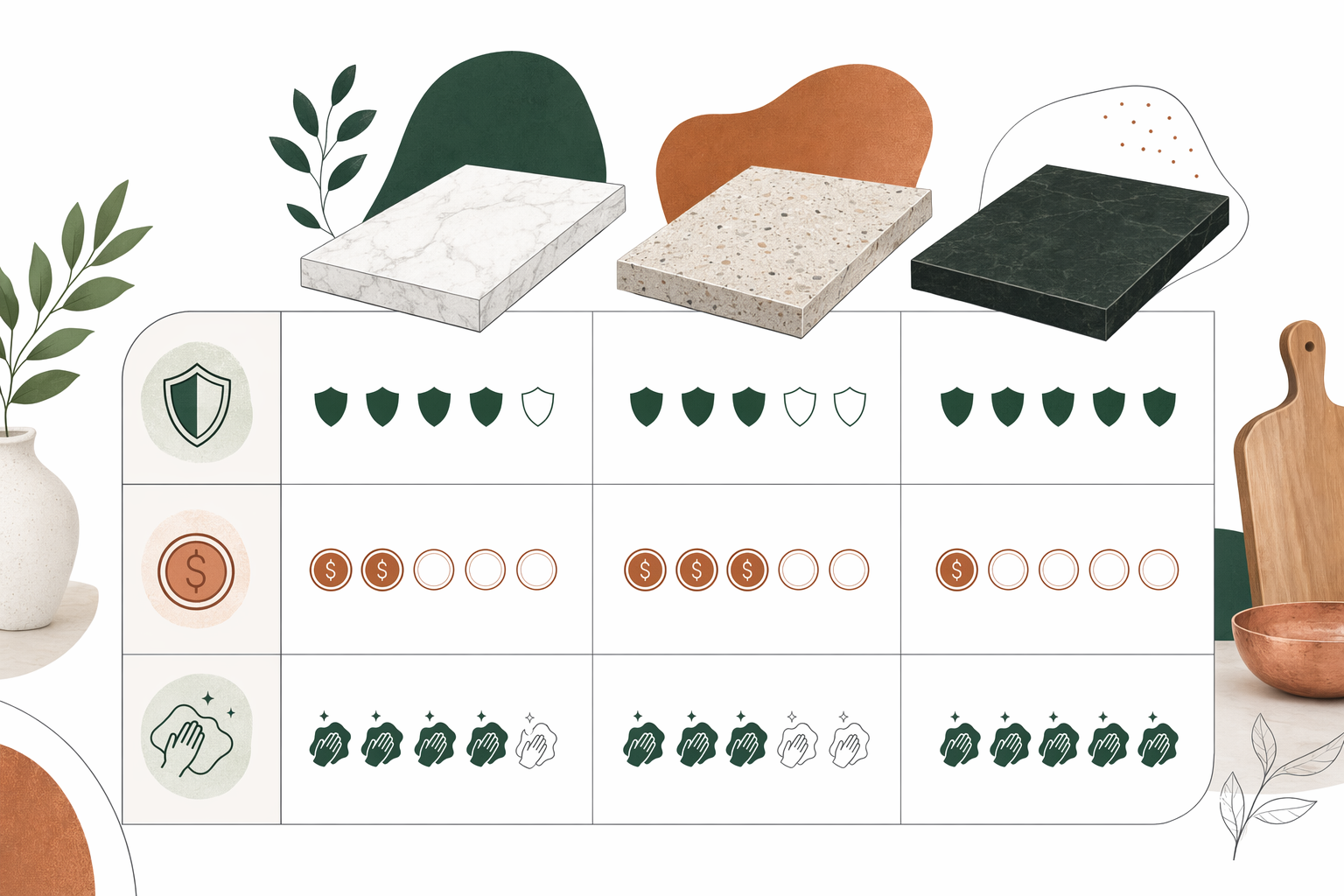
Start with the real question: how do you live in your kitchen?
A countertop is not just a color choice. It takes hot pans, water, knives, spills, and cleaning products. The best material for one home can be the wrong one for another.
When you compare options, think about these points first:
- Budget: Countertops can take a big share of a remodel budget, especially if you choose premium stone, a large island, waterfall edges, or full-height backsplash.
- Maintenance: Some materials need regular sealing. Others are close to wipe-and-go.
- Durability: Do you want something that stands up well to stains, scratches, and heat?
- Look: Do you want natural variation, a clean solid color, or a pattern that looks more dramatic?
- Repairability: Some surfaces can be refinished or repaired more easily than others.
Typical installed countertop costs often land around $60-$120 per square foot for quartz, but the real price depends on the size of the kitchen, the scope of work, the material you choose, edge details, cutouts, and your area. If you are planning a larger remodel, see typical kitchen budget ranges on our costs page.
If you already know you want help comparing local options, you can get matched for free with licensed, insured kitchen remodelers. You compare estimates and decide who to hire.
Common countertop materials, with honest pros and cons
Here is the short version homeowners usually wish they had before shopping.
Quartz
Engineered quartz is one of the most popular choices for a reason. It gives a clean, consistent look and is usually easy to live with.
- Typical installed range: about $60-$120+ per sq ft
- Good for: busy households that want low maintenance
- Pros: non-porous, low upkeep, many colors and patterns, usually good stain resistance
- Cons: can cost more than basic laminate or butcher block, seams still exist, very high heat can damage it
Granite
Granite is natural stone, so each slab looks different. Many homeowners like that it feels more unique than engineered surfaces.
- Typical installed range: about $50-$150+ per sq ft
- Good for: people who want natural stone and strong heat resistance
- Pros: durable, good heat performance, natural beauty, wide range of pricing
- Cons: often needs sealing, some slabs stain more easily than others, pattern can make seams and repairs more noticeable
Marble
Marble looks beautiful, but it is usually picked for style, not easy upkeep.
- Typical installed range: about $70-$200+ per sq ft
- Good for: homeowners who accept wear as part of the look
- Pros: classic high-end appearance, naturally cool surface
- Cons: etches and stains more easily, scratches more easily, needs more care than quartz or many granites
Laminate
Laminate has improved a lot in appearance. It is still one of the most budget-friendly options.
- Typical installed range: about $20-$50+ per sq ft
- Good for: lower-budget remodels, rentals, quick updates
- Pros: affordable, many styles, easy to clean, lower upfront cost
- Cons: less heat resistance, edges and seams may wear, harder to repair invisibly, does not usually add the same resale appeal as stone
Butcher block / wood
Wood counters can make a kitchen feel warm and less cold than stone.
- Typical installed range: about $40-$100+ per sq ft
- Good for: homeowners who like a softer, natural look and can handle upkeep
- Pros: warm appearance, can often be sanded and refinished, good for certain prep tasks
- Cons: needs maintenance, can scratch, can stain, water around sinks is a common problem area
Solid surface
This category includes seamless-looking man-made surfaces often used in practical family kitchens.
- Typical installed range: about $35-$85+ per sq ft
- Good for: people who want easier repair and a simple look
- Pros: non-porous, many color choices, seams can be less visible, repairable in some cases
- Cons: less heat resistant than stone, can scratch more easily
For a broader look at layout and finish choices in a full remodel, see full kitchen remodel or compare project options with local pros.
How to choose the right material for your budget
Use this simple filter.
1. Set a real budget range first.
If your kitchen is a minor refresh, your full project might be around $5,000-$25,000. A mid-range remodel often falls around $25,000-$60,000. A full gut remodel can run $60,000-$150,000+. Your actual price depends on kitchen size, scope, materials, and your area.
2. Decide where your money matters most.
Cabinets often take 25%-30% of the total budget. If cabinets are your priority, you may want a more modest countertop choice. If your cabinet layout stays the same, you may be able to spend more on the counter.
3. Match the surface to your habits.
- Lots of cooking and low patience for upkeep: quartz
- Want natural stone and can handle sealing: granite
- Need lower cost: laminate or some solid surface options
- Love warm natural texture: butcher block
- Want a luxury look and accept wear: marble
4. Ask what is included in the estimate.
A low number may not include demolition, sink cutouts, faucet holes, edge profile, old counter removal, plumbing reconnect, backsplash work, or haul-away.
5. See full slabs or large samples if possible.
Small samples can hide strong movement, veining, or color shifts.
If you want more detail on pricing and installation factors, our countertops page can help you frame the conversation before you collect written estimates.
Mistakes that cost homeowners money
These are common problems, especially when people are rushed or comparing only the surface price.
- Choosing by showroom sample only. A tiny sample does not show the real pattern, seam placement, or how light changes the color.
- Ignoring maintenance. Some homeowners pick marble or wood without understanding sealing, etching, or water care.
- Forgetting edge and fabrication costs. Fancy edges, waterfall ends, and extra cutouts can push the total much higher.
- Not measuring the project correctly. Islands, overhangs, backsplashes, and sink areas all affect the final installed cost.
- Assuming every quartz or granite is the same. Brands, slab quality, thickness, origin, pattern, and installer skill all matter.
- Skipping written scope details. Get the exact material, thickness, edge profile, sink cutouts, seam plan, demo, and install details in writing before any deposit.
- Hiring without checking basics. Always hire licensed and insured remodelers where required, and verify the license and insurance yourself. Follow local permits and building code.
One more truth: the cheapest estimate is not always the cheapest job. If a price seems far below the others, ask what is missing.
What to do next before you hire anyone
A good next step is simple.
- Pick 2 or 3 materials that fit your budget and cleaning habits.
- Save a few photos, but focus more on real samples than online pictures.
- Measure your kitchen roughly so you can talk about square footage and island size.
- Ask for written estimates from licensed, insured remodelers. Make sure the price and scope are both clear before any deposit.
- Verify license and insurance yourself. Ask who handles template, fabrication, old countertop removal, plumbing reconnect, and permit-related work if needed.
CopperSill is a free matching service for homeowners. We do not remodel kitchens or give construction advice. We help you connect with licensed, insured kitchen remodelers so you can compare estimates, choose who to hire, and hold final payment until the work is done as agreed.
When you are ready, get matched for free. If you still need help comparing brands and care needs, review our countertop material guide style notes and questions to ask before you commit.
Pick a countertop that fits your real budget and your cleaning habits, not just the showroom look. Get written estimates from licensed, insured remodelers, verify their license and insurance yourself, and compare what is actually included before you decide.