Kitchen permits & inspections explained
Permits and inspections are not just paperwork. They help make sure kitchen work is done to local code and can protect you from unsafe wiring, bad plumbing, and expensive redo work later.
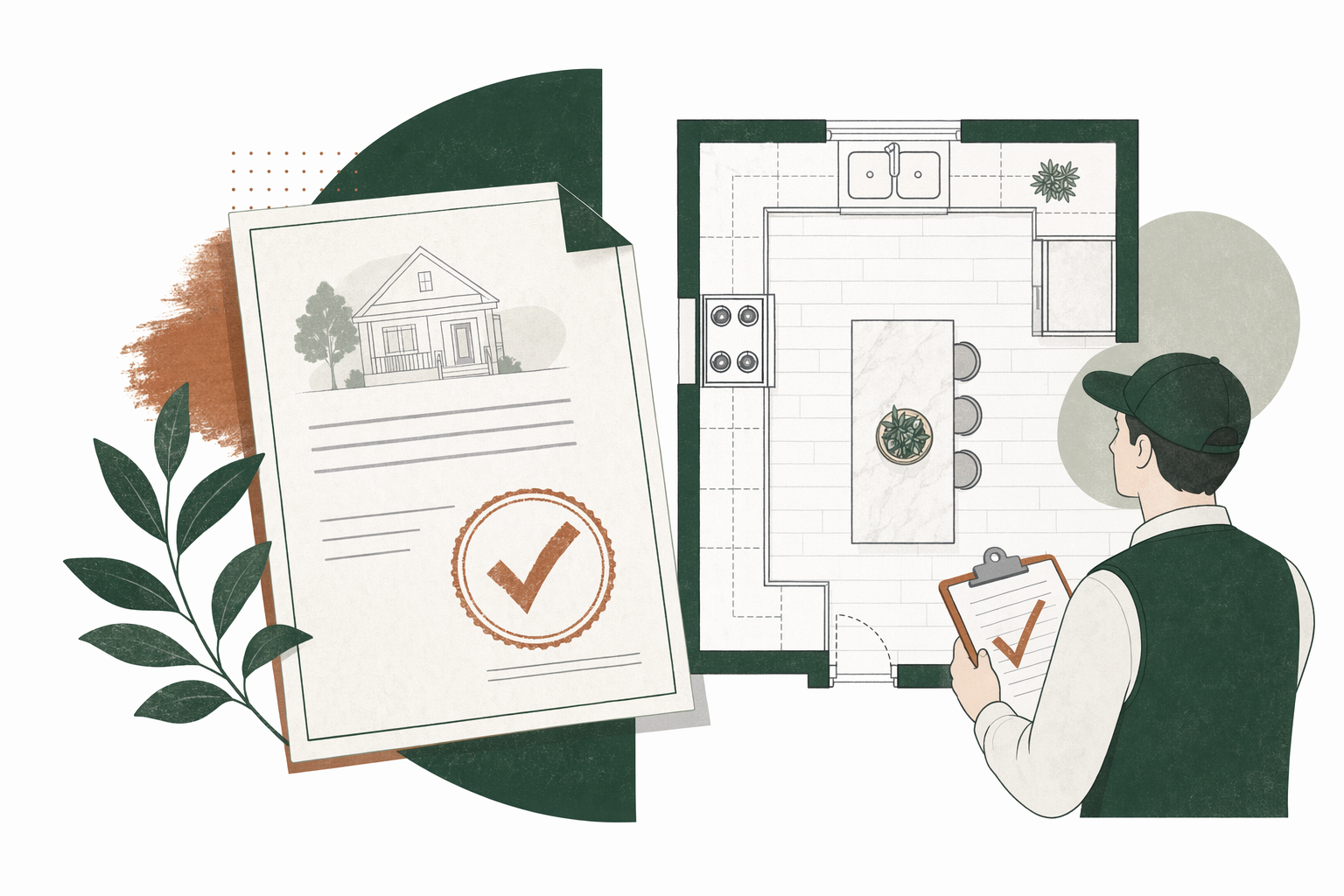
What a permit really means
A permit is approval from your city or county to do certain kinds of work. An inspection is when the local building department checks that the work meets code at key stages.
For a kitchen remodel, permits often come up when the job changes electrical, plumbing, gas, walls, windows, or layout. Simple cosmetic updates may not need one. That can include painting, some flooring, replacing hardware, or swapping a faucet in some areas. But rules are local, so do not guess.
The safest approach is simple: ask the remodeler and verify with your local building department yourself. If you are still planning the job, start with a clear scope and budget on our costs page, then talk to licensed and insured pros through get matched.
A permit is usually tied to the scope of work, not just the total price. A small job can still need permits if it touches the wrong systems. A bigger cosmetic job may not. That is why exact cost alone does not answer the permit question.
When kitchen remodel permits are commonly required
In many US areas, permits are commonly required for work like:
- New or moved electrical: adding circuits, moving outlets, under-cabinet wiring, recessed lights, panel changes
- Plumbing changes: moving sink lines, adding pot fillers, relocating dishwashers, changing drain or vent lines
- Gas line work: moving or adding a gas range line
- Structural changes: removing or changing walls, widening openings, changing beams or headers
- Mechanical/HVAC work: moving ductwork, adding vents, changing range hood venting routes
- Window or exterior door changes in the kitchen
- Full gut remodels where walls are opened and multiple systems are updated
Work that may or may not need a permit depending on local rules:
- Replacing cabinets in the same layout
- Installing countertops
- Replacing fixtures in the same location
- Tile backsplash
- Flooring
Even if one trade says, "We do this all the time without permits," that does not make it safe or legal. Local rules win. Always verify.
If your project includes a full layout change, gut renovation, or major cabinet and countertop work, review full kitchen remodel options so you can compare the scope clearly with each remodeler.
What inspections usually cover
Inspections do not happen only at the end. Many kitchen projects have rough inspections before walls are closed, then a final inspection after fixtures and finishes are installed.
Common inspection points include:
- Rough electrical: wiring, box placement, circuit sizing, GFCI/AFCI requirements, dedicated appliance circuits
- Rough plumbing: supply lines, drains, vents, shutoffs, leak checks
- Rough mechanical: duct routes, venting, make-up air rules in some areas
- Framing or structural: if walls, beams, or openings changed
- Insulation or drywall: in some jurisdictions
- Final inspection: devices installed, fixtures connected, work complete and safe to use
Kitchen code details vary by city and county, but inspectors often look closely at countertop receptacle spacing, appliance circuits, GFCI protection near water, venting, and safe clearances.
This is one reason to hire licensed and insured remodelers and to check their license and insurance yourself. A qualified pro should know the local sequence, schedule inspections on time, and avoid covering work before approval.
Before work starts, get the price, scope, materials, permit responsibility, and inspection responsibility in writing. Do that before any deposit.
Who pulls the permit, and what you should ask
In many places, the contractor or trade permit holder pulls the permit. Sometimes a homeowner can pull it, but that does not mean you should.
If a remodeler asks you to pull the permit for work they will control, pause and ask why. In some situations, that can shift responsibility onto you.
Ask these questions before you hire:
- Which permits do you think this job needs?
- Who will pull them?
- Are you licensed for this work, and are you insured?
- Can I verify your license number and insurance?
- What inspections will happen, and at what stages?
- Will you be onsite for inspections?
- What happens if work fails inspection?
- Will permit fees be listed separately in the written scope?
A good written proposal should say what is included, what is excluded, who handles permits, and whether the price may change if hidden problems are found after walls are opened.
For help comparing pros, use our guide to vet a kitchen contractor. You should compare quotes, choose who to hire, and hold final payment until the work and required inspections are complete.
Common permit mistakes that cost homeowners money
These are the mistakes that tend to cause the biggest problems:
- Believing "cosmetic" means no permit even when wiring, plumbing, or gas is being moved
- Starting demo too early before permit approval
- Letting walls get closed before rough inspection
- Not checking the permit card or online permit record to confirm it was actually issued
- Hiring unlicensed or uninsured workers because the price looks lower
- Paying too much up front before permit, materials, and scope are clear in writing
- Assuming failed inspections are minor. Some failures mean reopening walls or redoing work.
- Skipping final inspection and finding out later during resale, insurance claims, or future repairs
A permit problem can affect more than today’s job. It may create issues if you sell the home, refinance, file an insurance claim, or need later repairs. The cheapest bid can get expensive fast if the work is not code-compliant.
Typical kitchen remodel costs still vary a lot by kitchen size, scope, materials, and area. As a general range, a minor refresh may run about $5,000-$25,000, a mid-range remodel about $25,000-$60,000, and a full gut remodel about $60,000-$150,000+. Permit costs are separate in many jobs and vary by location. These are only typical estimates, not quotes or guarantees.
What to do next if you are planning a kitchen remodel
Use this simple plan:
- Write down the scope. Are you keeping the same layout, or moving sink, stove, walls, or windows?
- Set a realistic budget range. Cabinets are often about 25-30% of the total budget. Quartz counters often run about $60-$120 per square foot installed, depending on the material, edge, thickness, and your area.
- Ask your local building department what usually needs a permit for a kitchen remodel in your city or county.
- Get matched with licensed and insured remodelers and compare written scopes. CopperSill is free for homeowners. Remodelers pay a flat fee to participate.
- Verify license and insurance yourself. Do not rely only on what is said in a call or ad.
- Get the full scope and price in writing before any deposit. Make sure permit responsibility is listed.
- Do not make final payment until the agreed work is complete and required inspections are signed off.
If you are ready to talk to local pros, start at get matched.
If your kitchen remodel changes wiring, plumbing, gas, walls, windows, or layout, permits and inspections are often required. Ask your city or county, hire licensed and insured remodelers, verify their license and insurance yourself, get the scope and permit responsibility in writing before any deposit, and do not make final payment until required inspections are done.