Countertops & surfaces
New counters can change how your kitchen looks and works. CopperSill helps you plan the job and get matched, free, with licensed and insured kitchen remodelers so you can compare options and choose what fits your home and budget.
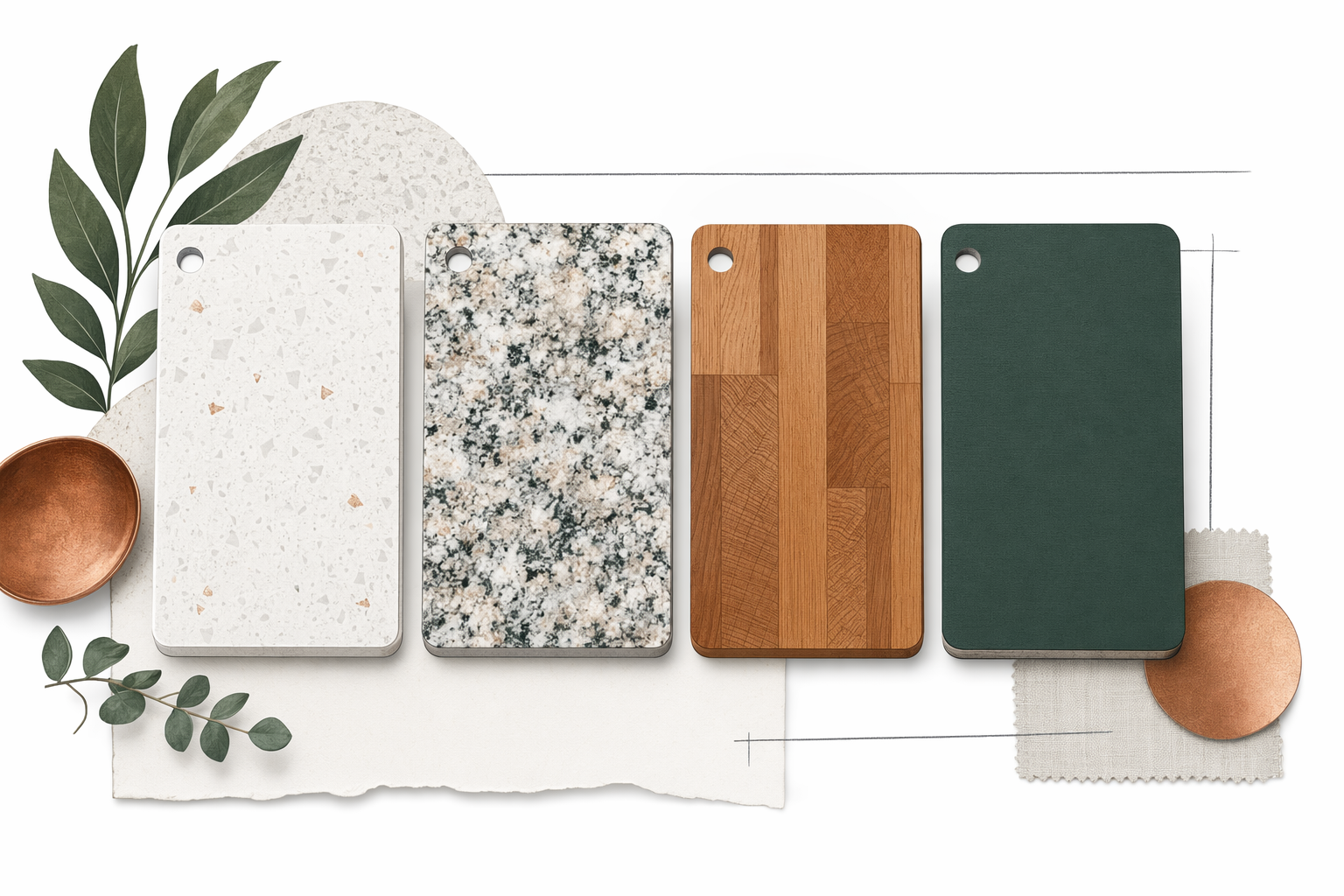
What this service is
Countertops and surfaces are one of the biggest visual changes in a kitchen. They also affect daily use. A busy family may want something hard to stain and easy to clean. A serious home cook may care more about heat resistance, edge details, and workspace.
CopperSill is a free matching service. We help you organize your project and connect with licensed, insured kitchen remodelers in your area. We do not install countertops, fabricate stone, disconnect plumbing, or manage construction. You compare quotes, you choose who to hire, and you hold the final payment.
This page covers the basics: common materials, typical cost ranges, the usual timeline, and what to ask before you sign. If you want a broader kitchen budget view, see costs. If you are still deciding on material, our countertop material guide can help.
How the process usually works
A countertop job sounds simple, but there are a few moving parts. The exact order depends on whether you are only replacing counters or doing cabinets, backsplash, sink, and appliances at the same time.
- Set your scope. Decide what is changing: just the counters, or also sink, faucet, backsplash, cooktop, cabinets, and lighting.
- Pick a material and edge style. Quartz, granite, laminate, butcher block, and solid surface all price differently and perform differently.
- Measure and inspect. A remodeler or fabricator usually takes final field measurements after cabinets are level and in place.
- Get written estimates. Ask for material, thickness, edge profile, cutouts, sink details, tear-out, haul-away, backsplash, and installation to be listed clearly.
- Template and fabrication. For stone and engineered surfaces, final templating often happens after cabinets are installed.
- Install and reconnect. Countertops go in, then sink, faucet, and any plumbing or appliance reconnections are completed by the right licensed pros where required.
A common mistake is ordering stone too early. If cabinets are not fully installed and level, final dimensions can change. That can cause delays and extra cost.
If your counters are part of a bigger remodel, start with full kitchen remodel.
Typical cost ranges
Countertop pricing varies a lot. The real price depends on the size of your kitchen, the scope of work, the materials, and your area. Labor rates and stone availability can change the number fast.
Here are typical installed ranges homeowners often see for countertop-only work:
- Laminate: about $20-$50 per sq ft installed
- Butcher block: about $40-$100 per sq ft installed
- Solid surface: about $50-$100 per sq ft installed
- Quartz: about $60-$120 per sq ft installed
- Granite: about $50-$130 per sq ft installed
- Marble: often $70-$180+ per sq ft installed
For many kitchens, a countertop replacement project may land around:
- Small, simple kitchen: roughly $2,000-$5,000
- Average kitchen with quartz or granite: roughly $3,500-$8,500
- Larger kitchen, island, premium slab, more cutouts: roughly $8,000-$15,000+
What pushes the price up:
- More square footage
- An island or waterfall edge
- Premium colors or bookmatched slabs
- Extra cutouts for sink, cooktop, soap dispenser, or outlets
- Full-height backsplash
- Old counter tear-out and disposal
- Plumbing disconnection and reconnection
- Repairs if cabinets are out of level or damaged
If countertops are part of a larger kitchen project, remember cabinets are often 25-30% of the total remodel budget. So it helps to look at counters together with cabinets instead of as a separate choice.
Material pros and cons, in real life
No material is perfect. The best choice depends on how you cook, how much maintenance you can tolerate, and how long you plan to stay in the home.
Quartz
- Pros: consistent look, low maintenance, no sealing, popular with buyers
- Cons: can cost more than basic granite or laminate, seams may show, very high heat can damage it
Granite
- Pros: natural stone look, strong, handles heat well
- Cons: some slabs need sealing, pattern varies, you need to see the actual slab if possible
Marble
- Pros: beautiful natural veining, classic look
- Cons: stains and etches more easily, higher maintenance, often not ideal for busy family kitchens
Laminate
- Pros: budget-friendly, many colors, quick turnaround
- Cons: can chip, swell at seams if water gets in, lower-end feel than stone for some buyers
Butcher block
- Pros: warm look, softer and welcoming, can fit farmhouse or modern kitchens
- Cons: needs regular care, can scratch, can stain, standing water is a problem
Solid surface
- Pros: smooth look, repairable in many cases, integrated sink options
- Cons: can scratch and scorch more easily than stone
A good remodeler should explain not just the pretty part, but the daily-life part. If you have kids, cook often, rent the home out, or want a lower-maintenance surface, that matters as much as color.
Timeline: how long a countertop project takes
A straight countertop replacement is often faster than people expect, but not instant. The timeline depends on your material, the shop schedule, and whether cabinets are already set.
A common timeline looks like this:
- 1-2 weeks: compare remodelers, choose material, get written estimates
- 1-3 weeks: order slab or material, depending on availability
- A few days to 2 weeks: template, fabricate, and confirm sink/cutout details
- 1 day: tear-out and installation for many standard kitchens
- 1-3 days after: plumbing reconnection, backsplash touch-up, punch list
For a simple laminate job, it may move faster. For custom stone, unusual edges, or a full kitchen remodel, it may take longer.
Ask this early: How many days will my kitchen be partly unusable? If the sink is disconnected, you need to plan around that. Also ask who handles damage if walls, tile, or old cabinets are affected during removal.
What to ask before you hire
This is where people get burned. The price sounds fine, but the written scope is vague. Then the extras show up later.
Use this checklist:
- Are you licensed and insured for this work in my area?
- Will you give me your license number and proof of insurance so I can verify both myself?
- What material is included exactly? Brand, color, thickness, finish, and edge profile?
- Does the estimate include tear-out, haul-away, cutouts, sink installation, backsplash, seam placement, and plumbing reconnection?
- Who templates the job, and when?
- What could cause the final price to change?
- How do you protect cabinets, floors, and nearby walls during removal and install?
- What warranty applies to material and to installation?
- Do I need permits for any related work in my town, especially if plumbing, gas, or electrical changes are involved?
- What deposit is required, and when is the final payment due?
Always get the price and scope in writing before any deposit. Follow local permits and building code. For work tied to plumbing, electrical, or bigger layout changes, ask what permits may apply and check your local rules. Our kitchen permits explained guide is a helpful starting point.
How to vet remodelers and use CopperSill well
CopperSill makes it easier to start, especially if English is not your first language. Matching is free to the homeowner. Participating remodelers pay a flat fee to be included. Then you decide who, if anyone, to hire.
To use the service well:
- Share clear project details. Tell us the material you want, whether cabinets are staying, if you need a new sink, and your rough timeline.
- Talk to more than one remodeler. Compare scope, not just the lowest number.
- Verify license and insurance yourself. Do not skip this step.
- Read the estimate line by line. Make sure measurements, materials, cutouts, and responsibilities are clear.
- Do not pay in full up front. Keep final payment until the agreed work is complete.
If you want help finding local pros, start here: get matched. If you want a stronger interview checklist first, read how to vet a kitchen contractor.
The main thing to remember: a good countertop job is not just about the slab. It is about accurate measurement, cabinet condition, careful installation, clear paperwork, and hiring licensed and insured people who stand behind the work.
Pick the countertop material that fits how you live, then compare written estimates from licensed and insured remodelers. Verify license and insurance yourself, get the full scope in writing before any deposit, follow local permit rules, and use CopperSill’s free matching service to compare your options.