Where your kitchen budget actually goes
Most kitchen budgets do not get blown by one big surprise. They get stretched by a lot of small choices, plus labor, layout changes, and finish upgrades. Here is where the money usually goes and how to stay in control.
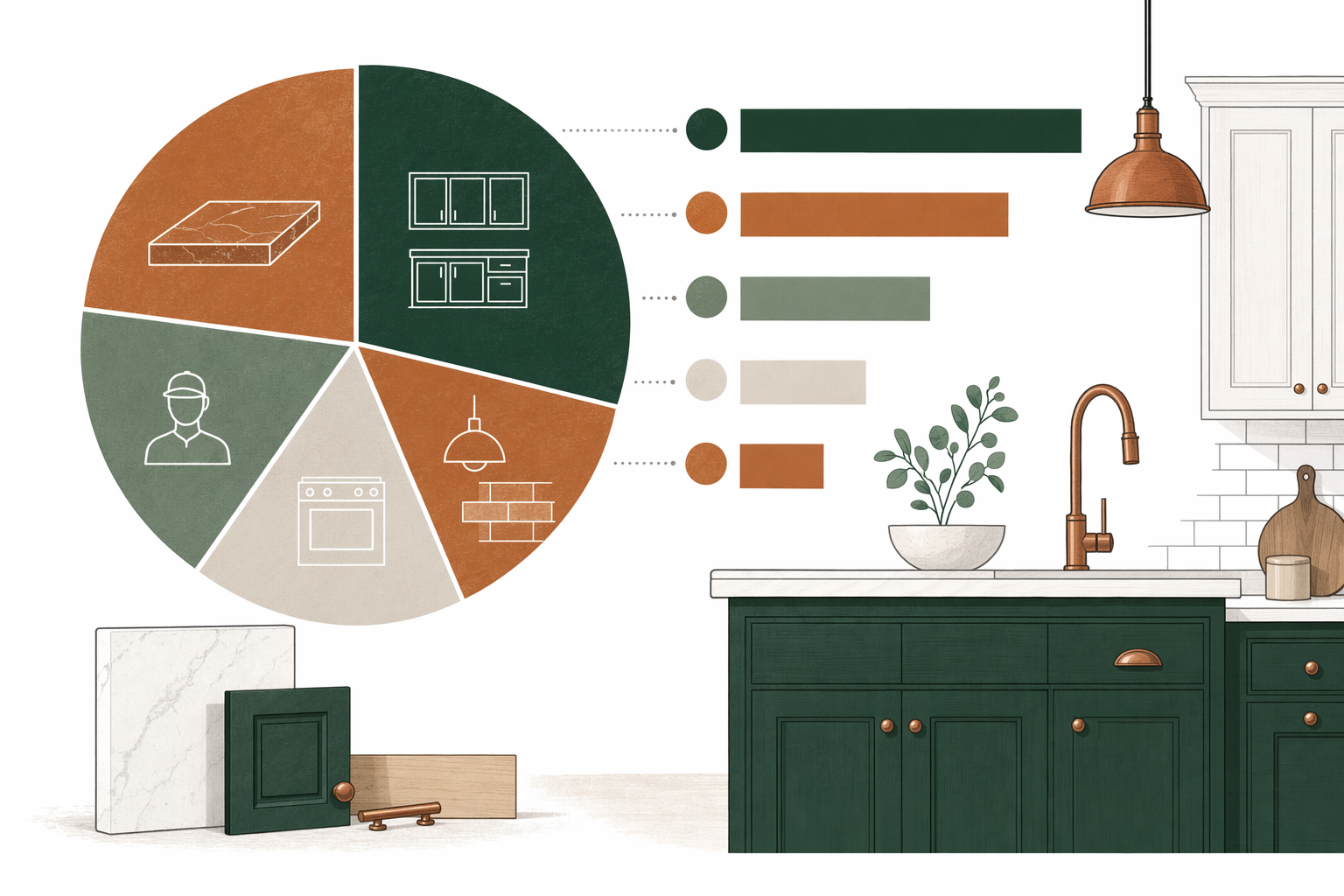
The short answer: cabinets, labor, and layout changes eat the most money
A kitchen remodel is not one price. It is a stack of costs. The real total depends on the size of your kitchen, the scope of work, the materials, and your area.
Typical ranges for US homeowners:
- Minor refresh: about $5,000-$25,000
- Mid-range remodel: about $25,000-$60,000
- Full gut remodel: about $60,000-$150,000+
In many projects, cabinets take about 25-30% of the total budget. Labor is also a major share. If you move plumbing, gas, electrical, or walls, the budget can jump fast.
A simple update usually costs less because you keep the same layout. That might mean painting, cabinet hardware, new lighting, a backsplash, or replacing countertops without moving sinks or appliances. A full remodel costs more because demolition, rough work, permits, inspections, and repair work all get added.
If you want a broader look at typical price ranges before you talk to pros, start with costs or learn what is included in a full kitchen remodel.
A realistic kitchen budget breakdown
Every project is different, but this is a useful way to think about where the money goes.
- Cabinets: 25-30%
Often the biggest line item. Stock cabinets cost less. Semi-custom and custom cost more. Interior organizers, tall pantry units, and specialty sizes add up quickly. See our cabinet buying guide.
- Labor: 20-35%
This can include demolition, installation, carpentry, painting, tile, cleanup, and project coordination. Labor costs vary a lot by city and by how complex the work is.
- Appliances: 10-20%
Basic packages are one thing. Panel-ready, pro-style, built-in, or smart appliances can change the whole budget.
- Countertops: 10-15%
Quartz often runs about $60-$120 per square foot installed, depending on color, thickness, edge profile, cutouts, and your area. Natural stone and premium slabs may cost more. Learn more about countertop materials.
- Flooring: 5-10%
Material is only part of it. Subfloor repair, leveling, and moving appliances can raise labor costs.
- Plumbing and electrical: 5-15%
Small updates can stay near the low end. Moving a sink, adding recessed lights, new circuits, under-cabinet lighting, or code upgrades can push this higher.
- Backsplash, paint, trim, finishes: 5-10%
These feel like small choices, but premium tile, detailed patterns, and finish upgrades can add real money.
- Permits, design help, waste removal, contingency: 5-15%
Dumpster fees, permit fees, inspection needs, and hidden repairs are easy to forget.
The exact percentages can shift. For example, if you keep your existing cabinets and only replace counters and backsplash, cabinets will not dominate the budget. If you do a full gut with custom cabinetry, they probably will.
What makes one kitchen cost twice as much as another
Two kitchens can look similar in photos and cost very different amounts in real life. The biggest reason is usually scope.
1. Keeping the layout vs. moving it
Leaving the sink, stove, dishwasher, and walls where they are is usually the best way to control cost. Once you move plumbing lines, gas lines, drains, vents, or electrical, labor grows.
2. Cabinet type and size
Stock cabinets are usually the budget-friendly path. Semi-custom gives more flexibility. Custom can solve odd spaces, but it costs more. Soft-close hardware, pull-outs, spice racks, trash rollouts, and tall pantry units all add cost.
3. Countertop material and fabrication
A straight run is simpler than an island with waterfall edges, seams, special cutouts, or thick-looking profiles. Material choice matters, but fabrication details matter too.
4. Old-house surprises
Water damage, uneven floors, outdated wiring, weak ventilation, or walls that are not straight can change the plan after demo starts.
5. Finish level
Budget tile, simple pendants, and standard hardware can look great. Handmade tile, integrated lighting, premium fixtures, and designer appliances can push a mid-range project into full-gut pricing.
6. Local labor costs and permit rules
Prices vary by market. So do permit requirements. Always follow local permits and building code. If work needs permits, make sure they are handled properly. Our kitchen permits explained guide can help you know what to ask.
This is why a one-line number from the internet is not enough. You need a written scope so you can compare real work, not just a total price.
How to keep the budget under control without making the kitchen cheap
You do not need the most expensive materials to get a durable, good-looking kitchen. You need clear priorities.
Try this approach:
1. Pick your top two upgrades
Maybe it is better cabinets and quartz counters. Maybe it is more storage and better lighting. Spend on the things you will touch every day.
2. Keep the layout if you can
This is one of the biggest money savers. If the kitchen works reasonably well now, a layout change may not be worth the extra plumbing and electrical cost.
3. Mix price levels
You do not need premium everything. Many homeowners save by choosing simple backsplash tile, standard hardware, or a more affordable appliance package while putting more money into cabinets.
4. Leave room for hidden issues
A good rule is to keep a contingency fund, especially in older homes. Even a careful estimate may not show what is behind walls or under floors until work starts.
5. Compare written scopes, not just totals
A lower number is not always a better number. One remodeler may include haul-away, permit handling, cabinet installation details, and backsplash work. Another may leave those out.
6. Get everything in writing before any deposit
You want the payment schedule, materials, model numbers if possible, allowances, labor details, and what happens if hidden damage is found.
CopperSill is a free matching service. We help you connect with licensed, insured kitchen remodelers so you can compare quotes and choose who to hire. You can start here: get matched.
Common budget mistakes that burn homeowners
These are the mistakes that cause stress, delays, and arguments later.
- Shopping by total price alone
A low estimate can be missing big pieces of work. Always compare line by line.
- Not verifying license and insurance yourself
Do not assume. Hire licensed and insured remodelers and verify both yourself before you sign.
- Paying too much too soon
Do not hand over a large deposit without a written scope, clear payment schedule, and contract terms.
- Using allowances without understanding them
An allowance is not a final price. If the estimate includes a low allowance for tile, lighting, or appliances, your final total can climb later.
- Changing the plan during the job
Change orders are sometimes necessary, but many budget overruns come from late decisions. Make as many finish and layout choices as possible before work starts.
- Forgetting non-material costs
Delivery, demo, disposal, permit fees, patching, painting, trim, and temporary kitchen setup can all affect the total.
- Skipping permit questions
Ask what permits are needed, who is responsible for them, and how inspections will be handled.
A careful hiring process helps. Use a checklist, ask direct questions, and make sure the scope is specific. Our guide on how to vet a kitchen contractor will help you ask the right things.
What to do next before you ask for estimates
If you want pricing that is actually useful, do a little prep first.
- Make a short list of what stays and what changes.
- Decide if you want a refresh, a mid-range remodel, or a full gut.
- Write down your must-haves and nice-to-haves.
- Save a few photos so remodelers can understand your style.
- Measure the room if you can, even roughly.
- List any known problems like leaks, old flooring, poor lighting, or not enough outlets.
Then ask each remodeler for the same basics:
- A written scope of work
- Material details or allowances
- Estimated timeline
- Payment schedule
- Permit responsibility
- Proof of license and insurance
CopperSill does not remodel kitchens. We help homeowners, including new immigrants and non-native English speakers, connect with remodelers for free so they can compare options clearly. You compare the estimates. You choose who to hire. You hold the final payment until the work in the contract is done. If you are ready, get matched.
Kitchen remodel money usually goes first to cabinets, labor, and any layout changes. Keep the layout if you can, compare written scopes instead of just the total price, hire licensed and insured remodelers, verify that yourself, and get every cost and payment term in writing before you pay a deposit.