Full kitchen remodel
A full kitchen remodel is the big version. Walls may move. Old cabinets, counters, flooring, and fixtures may all come out. The cost and stress can be worth it, but only if you plan the scope clearly and hire the right licensed, insured remodeler.
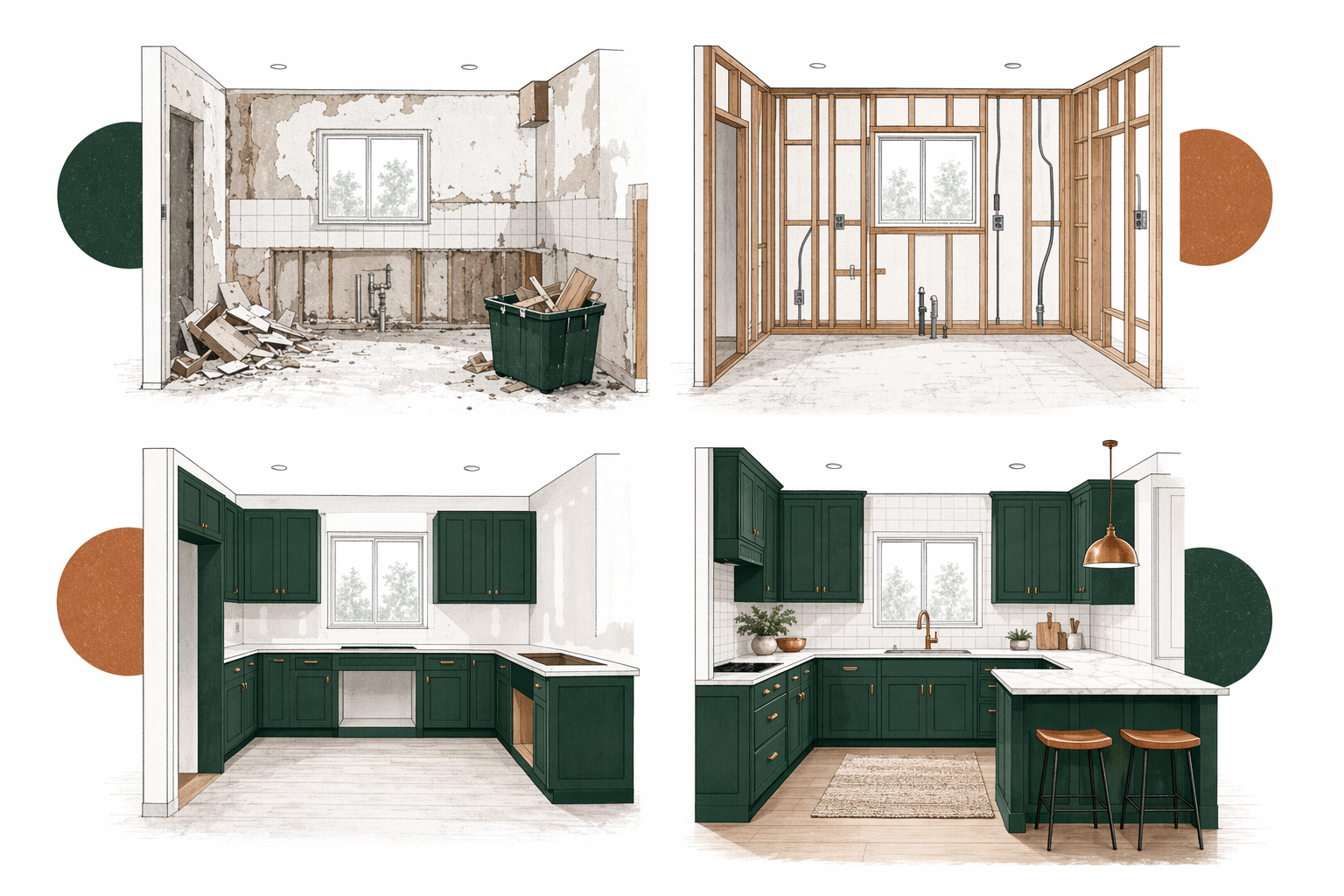
What a full kitchen remodel usually includes
A full kitchen remodel means more than swapping a countertop or painting cabinets. It often includes a near-total reset of the room.
Typical work may include:
- Demolition of old cabinets, counters, backsplash, flooring, and fixtures
- New cabinet layout and storage changes
- New countertops, sink, faucet, and backsplash
- New flooring and lighting
- Appliance replacement or relocation
- Electrical and plumbing updates
- Drywall, paint, trim, and finish work
- Sometimes wall removal, door or window changes, or ventilation updates
This is different from a lighter update. A minor refresh may keep the same layout and save money. A full remodel often changes the layout, the function, or both. If you are still deciding how big your project should be, compare this page with kitchen remodel costs and our overview of a full kitchen remodel service.
CopperSill does not remodel kitchens. We help you plan the project and get matched, at no cost, with licensed, insured remodelers in your area. You compare options and choose who to hire.
How the process works from planning to build
Most homeowners do better when they break the job into steps instead of trying to decide everything at once.
1. Set your real goal
Decide what is not working now. Bad storage? No prep space? Old wiring? Poor lighting? A full remodel should solve problems, not just change colors.
2. Set a working budget range
Use a range, not one magic number. Full remodels often uncover hidden issues inside walls or under floors.
3. Choose your scope
The layout matters most. Keeping plumbing and gas lines in the same place can lower cost. Moving them can add labor, permit needs, and time.
4. Pick core materials early
Cabinets, counters, appliances, flooring, and tile affect both price and schedule. Cabinets alone are often 25-30% of the total budget. Quartz countertops often run about $60-$120 per square foot installed, depending on color, thickness, edge profile, cutouts, and your area. See cabinets and countertops if you want to understand those choices first.
5. Talk to licensed, insured remodelers
Ask each one how they handle permits, scheduling, change orders, and who is on site each day. Verify the license and insurance yourself.
6. Get the scope and price in writing
Before any deposit, make sure the written agreement lists materials, allowances, labor, cleanup, payment schedule, and what happens if hidden damage is found.
7. Build with a little buffer
Even good jobs can run into delays from backordered materials, inspection timing, or damage found after demolition.
Typical cost range for a full kitchen remodel
In many US markets, a full gut kitchen remodel typically lands around $60,000 to $150,000+. Some smaller kitchens come in below that. Some high-end projects go far above it. The real price depends on the size of the kitchen, the scope of work, the materials, and your area.
A rough way to think about budget:
- $60,000-$85,000: Smaller or simpler full remodel, more standard finishes, limited layout changes
- $85,000-$120,000: Mid-to-upper full remodel, semi-custom cabinets, better appliances, more electrical or plumbing work
- $120,000-$150,000+: Larger kitchen, custom cabinets, premium finishes, major layout changes, structural work, or high labor-cost area
Common budget drivers:
- Cabinets: often the biggest line item at about 25-30% of the budget
- Countertops: quartz is common and usually about $60-$120/sq ft installed
- Layout changes: moving sink, range, gas, or walls can raise labor and permit costs
- Electrical upgrades: older homes may need panel or wiring work to meet code
- Plumbing repairs: old pipes or drains can add surprise costs
- Appliances and ventilation: especially if sizes or locations change
- Flooring and subfloor repair: damage is often not visible until demolition
Ask every remodeler to separate the estimate into clear categories. That helps you compare apples to apples. It also shows where you can save money without cutting the wrong corner. For a broader breakdown, read kitchen remodel costs.
How long it takes and where delays happen
A full kitchen remodel is usually measured in weeks to months, not days. A common build window is about 6 to 12 weeks once work starts, but planning, selections, ordering, and permits can add several weeks before demolition begins.
A realistic timeline often looks like this:
- 1-4 weeks: planning, measurements, scope, and estimate review
- 2-8 weeks: material selections and ordering
- 1-6+ weeks: permits, if required in your area
- 1 week: demolition
- 1-3 weeks: rough electrical, plumbing, framing, inspections
- 1-3 weeks: cabinets, counters, tile, flooring, paint, fixtures, finish work
- 1 week: punch list and final corrections
What causes delays:
- Cabinets or appliances arrive late or damaged
- Countertop template cannot happen until cabinets are in
- Hidden water damage, mold, or uneven floors show up after demo
- Permit or inspection scheduling slows things down
- Homeowners change materials or layout mid-project
This is why a temporary kitchen plan matters. Set up a microwave, coffee maker, paper goods, and a place to wash dishes before the work starts. If your project needs permits, follow local rules and building code. Our kitchen permits guide can help you know what questions to ask.
Pros, cons, and when a full remodel makes sense
A full remodel can be the right move, but it is not the right move for every house.
Pros
- Fixes poor layout, not just old finishes
- Can improve storage, lighting, workflow, and safety
- Lets you update old wiring, plumbing, and ventilation
- Gives you one coordinated result instead of patchwork updates
- Can make an older home easier to live in every day
Cons
- Highest cost level of kitchen work
- Bigger chance of hidden conditions once walls and floors open up
- Longer disruption to daily life
- More decisions, more scheduling, more moving parts
- Easy to overspend if the scope is not controlled
A full remodel usually makes sense when:
- The current layout wastes space or creates traffic problems
- Cabinets are failing, not just outdated
- You have old systems that likely need code updates
- You plan to stay in the home long enough to enjoy the result
- Several parts of the kitchen need work at the same time
It may not make sense if the layout already works and the problems are mostly cosmetic. In that case, cabinet refacing, new counters, lighting, paint, or partial updates may get you where you want to go for less. If cabinets are your main issue, our cabinet buying guide can help you compare options.
What to ask before you hire anyone
This is where many homeowners get burned. The low number on page one is not enough. You need details.
Ask each remodeler:
- Are you licensed and insured for this type of work in my area?
- Will you use employees, subcontractors, or both?
- Who is my day-to-day contact once the job starts?
- What is included in this estimate, and what is an allowance?
- Are permits needed, and who handles them?
- What could change the price after demolition?
- How do you handle change orders?
- What cleanup and debris removal are included?
- What is the payment schedule?
- What needs to happen before final payment?
Also ask for the estimate in writing with:
1. A clear scope of work
2. Brand or quality level for major materials
3. Start and completion timing as realistically as possible
4. Payment stages tied to work completed
5. Warranty details in writing
Always verify the license and insurance yourself. Get the price and scope in writing before any deposit. Follow local permit and code requirements. And keep control of the project: you compare quotes, you choose who to hire, and you hold the final payment until the agreed work is complete.
How CopperSill helps you compare remodelers for free
CopperSill is a free matching service for homeowners. We help you organize your project details and connect with licensed, insured kitchen remodelers who serve your area. Participating remodelers pay a flat fee to be included. The matching is free to you.
What you can expect:
- A simple way to describe your kitchen, goals, and timeline
- Help in multiple languages for homeowners who are more comfortable speaking another language
- Matches with remodelers so you can compare availability, communication, and written estimates
- No pressure to hire anyone
To get the best results, be ready to share:
- Your ZIP code
- Rough kitchen size
- What you want to change
- Whether you want to keep or change the layout
- Your target timeline
- Best phone number or email for follow-up
We do not need sensitive financial records, account numbers, or SSNs. Start here: get matched. And before you hire, use our guide on how to vet a kitchen contractor.
A full kitchen remodel is a big project that can cost about $60,000 to $150,000+ depending on your kitchen size, the work, the materials, and your area. Compare written estimates from licensed, insured remodelers, verify license and insurance yourself, follow permit rules, and use CopperSill to get matched for free.