Plumbing & electrical scope
In many kitchen remodels, the plumbing and electrical work is where the budget and schedule can change fast. If you know what is staying, what is moving, and what must meet current code, you can compare bids more clearly and avoid expensive surprises.
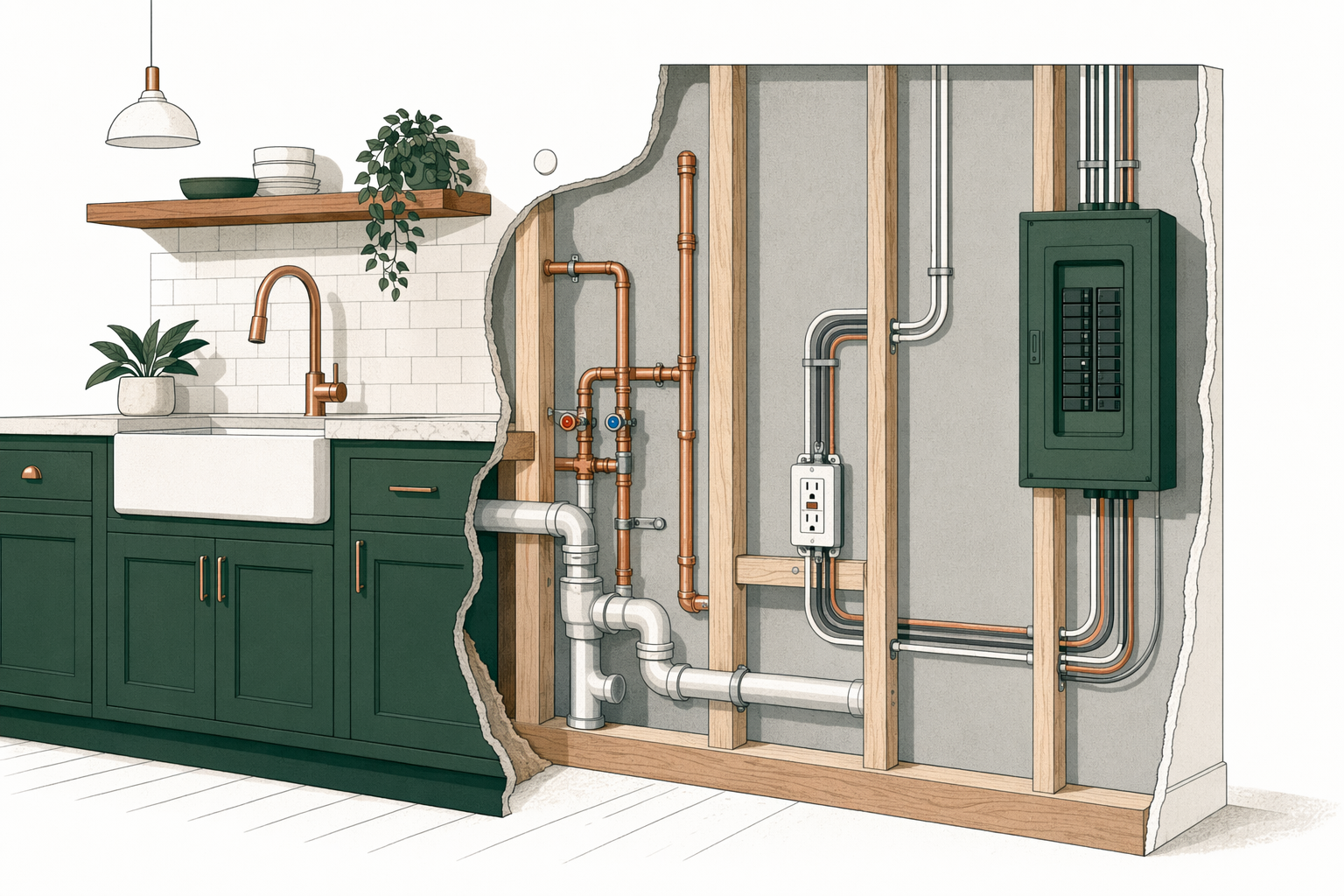
What “plumbing and electrical scope” means in a kitchen remodel
This part of the project is the behind-the-walls work that makes the kitchen function safely. It usually covers water lines, drain lines, shutoff valves, gas lines if present, outlets, lighting circuits, appliance connections, and panel or circuit changes when needed.
In plain terms, the scope answers questions like:
- Are the sink, dishwasher, refrigerator, or gas range staying in the same place?
- Are you adding island outlets, under-cabinet lights, pendant lights, or more recessed lights?
- Does your home need new dedicated circuits for a microwave, wall oven, or induction range?
- Will old pipes, old wiring, or an undersized panel need upgrades to meet local code?
This matters because a kitchen can look simple on the surface but become expensive once walls open up. A cosmetic refresh with the same layout may need only small plumbing and electrical updates. A full layout change often means new rough-in work, permits, inspections, drywall repair, and more labor.
If you are still planning the whole project, start with a realistic budget on our costs page. If you already know you want a full remodel, see full kitchen remodel.
How the work usually happens
A normal kitchen remodel follows a sequence. The exact order depends on your home and your area, but it often looks like this:
- Plan the layout. Decide what is staying and what is moving. Moving a sink or range usually raises cost more than replacing finishes in place.
- Define the rough-in scope. The remodeler and trade partners map water, drain, gas, outlets, lights, switches, venting, and appliance requirements.
- Pull permits if required. Many plumbing and electrical changes need permits and inspections. Follow local rules and read kitchen permits explained.
- Demo and open walls. Once the old kitchen comes out, hidden issues may show up, like corroded drain lines, non-grounded wiring, or water damage.
- Rough plumbing and rough electrical. Pipes, boxes, circuits, shutoffs, and connections are installed before walls are closed.
- Inspection. Your local inspector may need to approve rough work before insulation and drywall.
- Finish installation. After cabinets and counters go in, the plumber and electrician return to connect fixtures, appliances, lights, switches, disposal, dishwasher, and more.
- Final inspection and punch list. Final code checks happen where required, then small corrections are completed.
Important: CopperSill does not do this work. We help you get matched, for free, with licensed and insured remodelers so you can compare written scope, price ranges, and timeline before you hire. You can get matched when you are ready.
Typical cost ranges
These are typical estimates, not quotes. The real price depends on the size of the kitchen, the scope of work, the materials, and your area.
For the kitchen as a whole, many homeowners see ranges like:
- Minor refresh: about $5,000-$25,000
- Mid-range remodel: about $25,000-$60,000
- Full gut remodel: about $60,000-$150,000+
Within that total, plumbing and electrical can be a modest line item or a major one.
Plumbing scope often falls around:
- $1,500-$5,000 for simpler updates when fixtures stay near the same place
- $5,000-$12,000+ when moving a sink, adding pot filler lines, relocating gas, replacing old drain lines, or correcting code issues
Electrical scope often falls around:
- $2,000-$6,000 for common kitchen rewiring, outlet updates, light changes, and appliance connections
- $6,000-$15,000+ if you need many new circuits, panel work, service upgrades, island wiring, or substantial code corrections
A few cost drivers to watch:
- Moving the sink usually costs more than replacing it in the same spot because of supply and drain changes.
- Island additions can add cost for both plumbing and electrical.
- Older homes often need more work once walls are open.
- Induction ranges, wall ovens, and larger appliances may require new dedicated circuits or panel capacity.
- Drywall, patching, painting, and flooring repair after rough-in are often separate line items.
Also remember that kitchen budgets are pulled in many directions. Cabinets often take 25-30% of the total budget, and quartz countertops often run about $60-$120 per square foot installed. If you are balancing trade work against finish choices, our cabinet buying guide can help you think through priorities.
Timeline: what is fast, what causes delays
For a straightforward kitchen where the layout stays mostly the same, the plumbing and electrical portion may move fairly quickly. For a full gut with layout changes, it can add meaningful time.
A rough guide:
- Simple updates: a few days of rough and finish work, spread across the project schedule
- Moderate scope: about 1-2 weeks including rough-in, inspections, and finish connections
- Bigger layout changes or older-home corrections: 2-4+ weeks once permit timing, inspections, and repairs are included
Common delay points:
- Permit approval takes longer than expected
- Hidden problems appear after demo
- The electrical panel is full or outdated
- A vent path, drain slope, or framing condition limits the new layout
- Appliances arrive late or have different connection requirements than expected
- Cabinets or counters are installed before all rough details are confirmed
A good written scope should explain what work happens before cabinets, what happens after counters, and who is responsible for permit coordination and inspections. If the schedule seems unusually short for major layout changes, ask more questions.
When it makes sense to keep things in place — and when moving them is worth it
There is no one right answer. The best choice depends on your budget, home condition, and how much the current layout bothers you.
Keeping plumbing and major electrical in place can be smart if:
- Your current layout works reasonably well
- You want better finishes without a full gut budget
- Your home is older and you want to limit hidden-risk costs
- You want less downtime without a working kitchen
Moving fixtures or appliances can be worth it if:
- The current layout creates daily frustration
- You are already opening walls and doing major cabinet changes
- You need better workflow, storage, or seating
- You are fixing deeper issues anyway, such as poor wiring or damaged plumbing
The biggest mistake is paying to move things without improving function enough to justify the cost. A small layout change can sometimes cost a lot. On the other hand, a thoughtful change can make the kitchen work better for years. Ask each remodeler to explain the value of every move, not just the price.
If your project also includes new cabinets or counters, review the tradeoffs on cabinets and countertops.
What to ask before you hire
Use these questions to compare bids on real scope, not just a low top-line number:
- What exactly is included in plumbing and electrical? Ask for each line item in writing.
- What is staying in place, and what is moving? Small wording differences can hide big cost differences.
- Are permits included? If yes, who pulls them and who schedules inspections?
- Will the bid cover code-required updates found during the job, or are those extra?
- Do you expect panel work, dedicated circuits, GFCI/AFCI protection, shutoff valve changes, or venting updates?
- What patching and repair is included after rough-in? Drywall, paint, flooring, and trim are not always included.
- What allowances or assumptions are you making about fixtures and appliances?
- How will change orders be priced and approved?
- What deposit is required, and what triggers progress payments?
- When is final payment due? Hold final payment until agreed work is complete and required inspections are done.
Always hire licensed and insured remodelers and verify the license and insurance yourself. Get the price and scope in writing before any deposit. Follow local permits and building code.
CopperSill is a free matching service. Participating remodelers pay a flat fee to be included. You compare quotes, you choose who to hire, and you hold the final payment.
How to vet the remodeler for this scope
A kitchen can look beautiful and still have bad work behind the walls. Vetting matters most here.
Focus on these points:
- License and insurance: Verify both yourself with the state or local authority and ask for current proof of coverage.
- Kitchen-specific experience: Ask how often they handle kitchens with plumbing and electrical coordination, not just general interior work.
- Written scope quality: Better pros usually provide clearer scope, assumptions, exclusions, and change-order process.
- Permit comfort: A remodeler should be able to explain when permits are needed and how inspections fit the schedule.
- Problem-solving style: Ask what happens if old wiring, pipe corrosion, or water damage is found after demo.
- Communication: If English is not your first language, ask whether they can communicate clearly in your preferred language or provide translated written summaries.
Red flags:
- They tell you permits are never needed for “small” kitchen wiring or plumbing changes
- They want a vague deposit before scope is written down
- They cannot clearly say what is included and excluded
- They discourage you from verifying license and insurance
- Their price is far below others without a clear reason
For a practical checklist, read vet a kitchen contractor. If you want to compare local licensed and insured remodelers, you can get matched for free.
Plumbing and electrical work can make or break a kitchen remodel budget. Keep fixtures in place when you can, get the scope in writing, verify license and insurance yourself, follow permits and code, and compare several licensed, insured remodelers before you choose.