How Much Does a Kitchen Remodel Cost?
A kitchen remodel can cost anywhere from a few thousand dollars for a light refresh to well over $100,000 for a full gut job. The real price depends on the size of your kitchen, the scope of work, the materials you choose, and labor rates in your area.
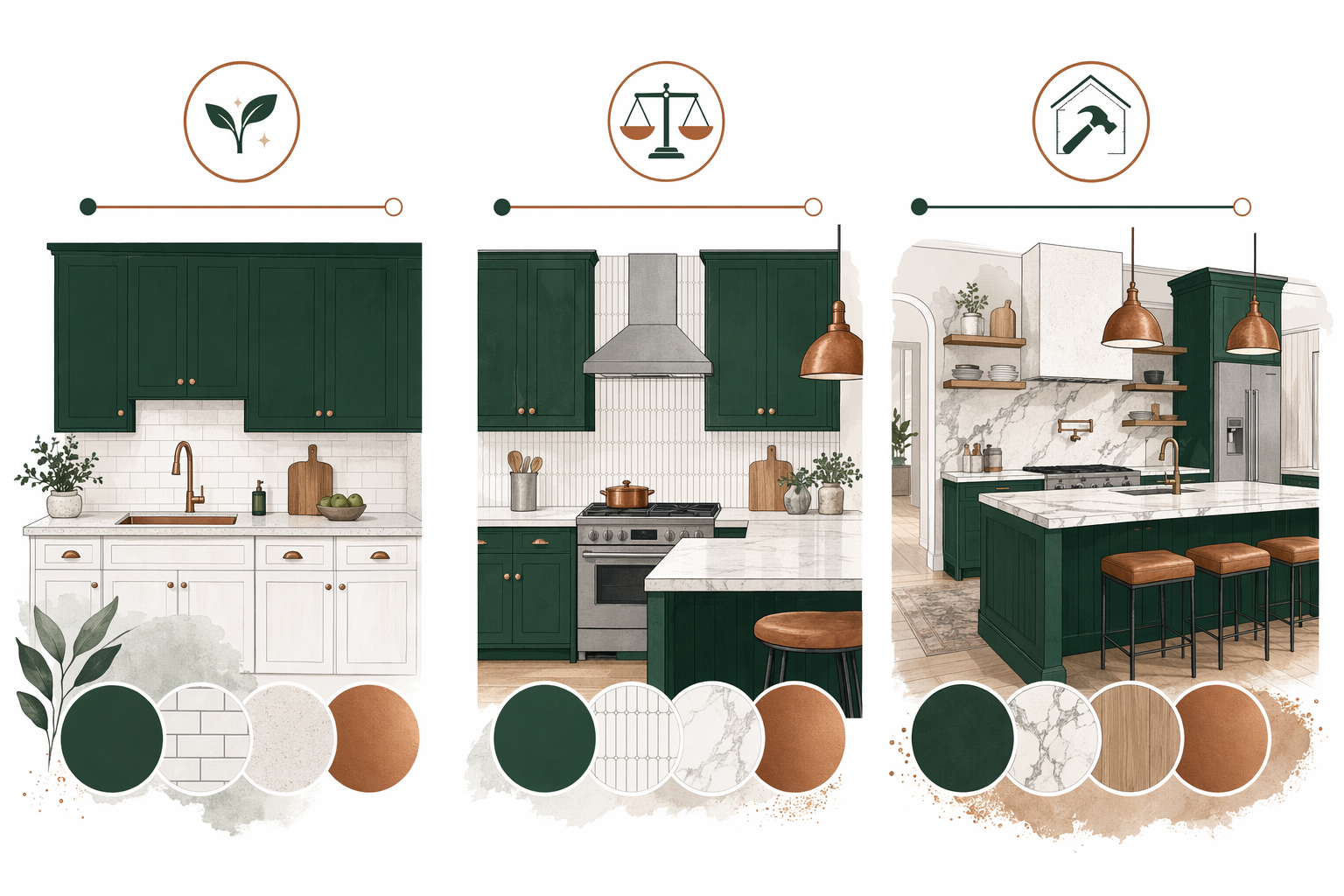
The short answer: most kitchen remodels fall into 3 ranges
If you want the quick version, here it is.
- Minor refresh: about $5,000 to $25,000. Think paint, hardware, lighting, maybe a new sink or faucet, stock countertops, or keeping the same cabinet boxes and repainting or refacing them.
- Mid-range remodel: about $25,000 to $60,000. This often includes new cabinets, new counters, new flooring, updated appliances, backsplash, lighting, and some layout changes that do not completely rebuild the room.
- Full gut remodel: about $60,000 to $150,000+. This is the big one. Walls may move. Plumbing or electrical may move. Cabinets, counters, flooring, lighting, appliances, and finishes are all replaced.
These are typical ranges, not quotes. A small kitchen with simple finishes may land near the low end. A large kitchen with custom cabinets, premium appliances, and major layout changes can go far above the high end.
If you are just starting, it helps to compare your ideas with common project types like a full kitchen remodel and then review broader costs before you talk to remodelers.
What makes one kitchen cost $15,000 and another cost $95,000?
The biggest cost drivers are not mysterious. They are usually the same four things: size, scope, materials, and location.
1. Size of the kitchen
A bigger kitchen usually needs more cabinets, more countertop square footage, more flooring, more backsplash, and more labor hours.
2. Scope of work
Keeping the same layout is usually cheaper. Moving a sink, range, dishwasher, gas line, or wall usually raises the price fast because more trades may be involved.
3. Materials and finish level
This is where budgets swing a lot.
- Cabinets are often 25% to 30% of the total budget.
- Quartz countertops commonly run about $60 to $120 per square foot installed, depending on color, thickness, edge profile, cutouts, and your area.
- Tile, flooring, hardware, lighting, and appliances can each push a project up or down.
4. Labor rates where you live
The same kitchen plan can cost very different amounts in different cities and states. Labor, permit fees, delivery costs, and code requirements vary by area.
Other common price movers:
- Water damage, mold, or old wiring found after demolition
- Bringing older work up to current code
- Lead time issues that cause delays or substitutions
- Structural changes, window changes, or relocating doors
- Temporary kitchen setup needs during a long project
A good rule: if your plan includes "while we're at it," your budget should include a contingency too. Many homeowners set aside 10% to 20% for surprises, especially in older homes. That is not because surprises always happen. It is because they happen often enough to plan for them.
Where the money usually goes
Homeowners often ask where the budget disappears. Here is the honest answer: kitchens are expensive because many parts come together in one small room.
A typical budget may include:
- Cabinets: one of the largest line items. Stock is usually less than semi-custom or custom. Learn more in our cabinet buying guide.
- Countertops: quartz, granite, butcher block, laminate, and other materials vary a lot in price and maintenance. Our countertop material guide can help you compare options.
- Labor: demolition, installation, finish work, cleanup, and project coordination
- Plumbing and electrical: especially if fixtures or appliances move
- Appliances: ranges, hoods, refrigerators, dishwashers, microwaves
- Flooring and backsplash: tile patterns and material choices can change labor cost a lot
- Permits and inspections: required in many areas for certain types of work
Here are a few realistic examples of how a budget can stack up:
1. Light refresh, same layout, small kitchen
- Paint cabinets or reface some fronts
- New hardware, sink, faucet, and lighting
- New laminate or entry-level quartz counters
- Typical total: $8,000 to $20,000
2. Mid-range update, average kitchen
- Replace cabinets with stock or semi-custom
- Install quartz counters and tile backsplash
- Replace flooring and appliances
- Keep plumbing mostly in place
- Typical total: $30,000 to $55,000
3. Full gut, larger kitchen
- Change layout or remove a wall only if approved and done to code
- New electrical and plumbing locations
- Semi-custom or custom cabinets
- Premium counters, lighting, flooring, and appliances
- Typical total: $70,000 to $150,000+
Again, these are estimates, not bids. Your actual price depends on your kitchen, your materials, and your local market.
How to compare estimates without getting burned
The safest way to shop a kitchen project is to make remodelers price the same scope.
Use this simple checklist:
1. Write down exactly what you want.
Include cabinet type, countertop material, appliance list, flooring, backsplash, sink, faucet, lighting, and whether the layout stays the same.
2. Ask for price and scope in writing.
The written estimate should say what is included, what is excluded, and what could trigger extra charges.
3. Check allowances carefully.
If an estimate says "$2,000 allowance for lighting" or "$5,000 allowance for cabinets," ask what products that really buys.
4. Verify license and insurance yourself.
Do not just take someone's word for it. Hire licensed and insured remodelers and check that the information is current.
5. Ask who pulls permits when needed.
Follow local permits and building code. If you are unsure what may require permits, read kitchen permits explained.
6. Do not compare only the bottom-line number.
A lower number may leave out demolition, disposal, delivery, finish painting, hookups, or permit costs.
7. Hold final payment until the work is complete.
Review punch-list items first. Do not pay the final amount just because most of the work looks done.
A very low estimate can be a warning sign. Sometimes it means the scope is thin. Sometimes it means the remodeler plans to make up the difference later with change orders. Sometimes it means poor insurance, poor labor, or both.
Before you hire anyone, use a vetting checklist like our guide on how to vet a kitchen contractor.
What to do next if you are still figuring out your budget
If you are early in the process, you do not need perfect numbers yet. You need a realistic plan.
Start here:
- Decide whether your project is a refresh, a mid-range remodel, or a full gut.
- Make a must-have list and a nice-to-have list.
- Pick two or three finish levels for cabinets and counters so you can see how the budget changes.
- Leave room in your budget for surprises.
- Talk only to licensed and insured remodelers, and verify that yourself.
- Get the scope and price in writing before any deposit.
CopperSill is a free matching service for homeowners. We help you plan your project details and get matched with remodelers in your area. Participating remodelers pay a flat fee. You compare estimates, you choose who to hire, and you hold the final payment.
When you are ready, you can get matched for free and start comparing options.
Most kitchen remodels cost about $5,000 to $25,000 for a basic refresh, $25,000 to $60,000 for a mid-range update, and $60,000 to $150,000+ for a full gut. Keep the same layout to save money, compare written estimates from licensed and insured remodelers, verify license and insurance yourself, and do not pay the final amount until the job is complete.